
Service guide
Signs You Need Water Heater Repair, Not Replacement
Some failures point to a part or setting problem. Others point to a tank or installation problem.
Answer capsule
Repair is worth asking about when the symptom is narrow and the tank is not clearly at end of life. Replacement becomes more likely when the tank leaks, the scope is unsafe, or the heater no longer fits demand.
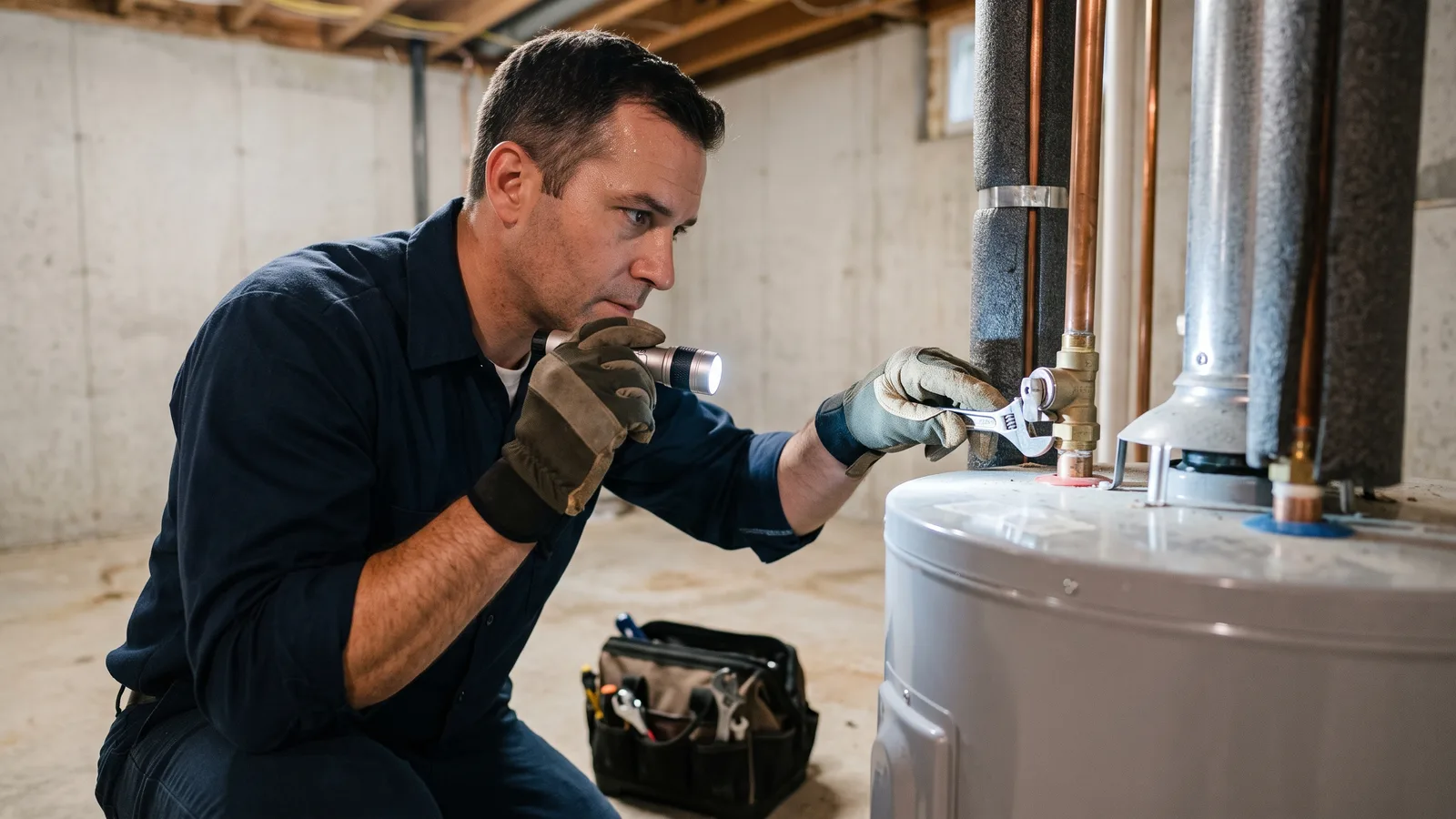
Signs You Need Water Heater Repair, Not Replacement
| Metric | Value | Source |
|---|---|---|
| Repair path | Specific symptom, part-level question | Research synthesis |
| Replacement path | Tank leak, age, safety or demand issue | Research synthesis |
| Parts page boundary | Product specs need claim markers | Product claims rule |
Do not let a generic replacement pitch skip the symptom. No hot water, inconsistent temperature, a failed element, a valve issue and a leaking tank are different conversations. The narrower the symptom, the more reasonable it is to ask whether repair is still on the table.
Repair is not automatically better. If the quote keeps returning to tank condition, safety, code correction or demand mismatch, replacement may be the cleaner decision. The important point is to ask for the diagnostic logic before comparing prices.
When the decision moves into parts, use the replacement parts guide. Product pages need sourced specs and disclosed links; service pages should stay focused on the repair or replacement path.
Where to go next
Start with the water heater installation hub if you are still choosing between repair, replacement, tankless and heat pump options. For the next decision, read Water Heater Replacement Parts Buying Guide: Anode Rods, Elements and Valves. Then compare Emergency Water Heater Replacement: Cost, Safety and Same-Day Limits. Finally, check Gas vs Electric Water Heater Installation Cost: Scope, Venting and Panel Upgrades.