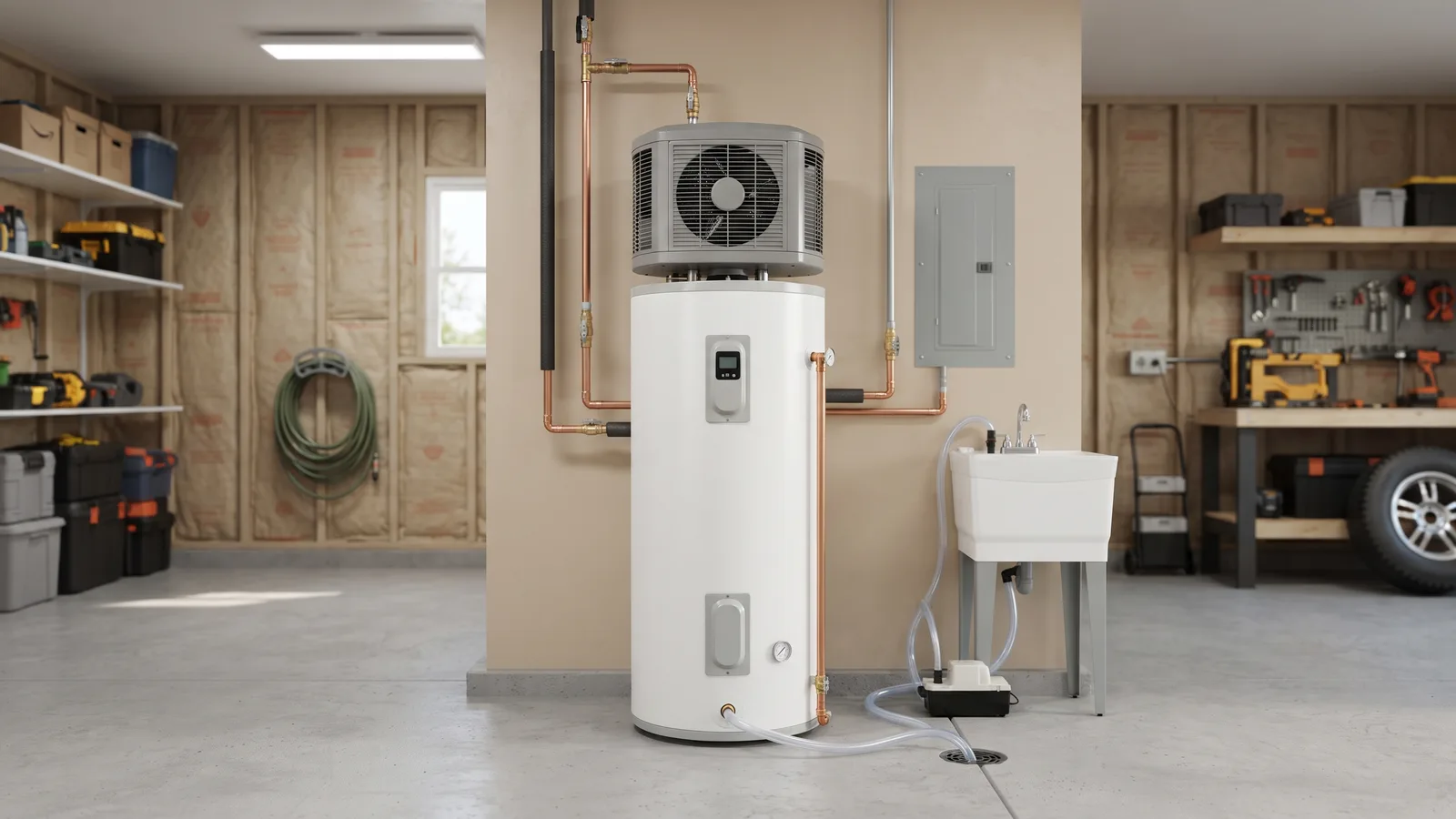
Named models: specifications and installation fit
Compare exact models, not a product-family name alone. The Rheem Performance Platinum family is represented here by the explicitly identified XE50T10H45U0 example; its specifications do not apply to every family member.
| Model | Verified specification | Consider / check first |
|---|---|---|
| Rheem Performance Platinum ProTerra XE50T10H45U0 Hybrid electric heat pump | An identified example for comparing hybrid recovery, installed footprint and maintenance access against the home. Check the exact electrical and airflow requirements. Watch out: Similar Rheem model numbers can have different specifications. Do not transfer family-wide savings or efficiency claims to this model. | |
| A. O. Smith Signature 900 HPS10-50H45DV Hybrid electric heat pump | A comparison option where its air, temperature, drain and electrical requirements can be met. Consider first-hour demand and the intended operating mode. Watch out: Closet suitability depends on the prescribed ventilation arrangement. Do not use a household-count promise as a substitute for sizing. | |
| Rheem ProTerra PROPH50 T0 RH120 Dedicated-circuit plug-in heat pump | A different electrical path to consider when comparing a plug-in heat pump with a 240V hybrid installation. Verify the dedicated circuit, demand and site requirements. Watch out: A plug-in designation does not remove the need to check recovery, airflow, condensate drainage or the full installation manual. |
Heat pump water heater installation fit
A heat pump transfers heat from surrounding air into the water. The installation therefore needs suitable air conditions and airflow, plus clearance for servicing. A small enclosed closet may need a manufacturer-approved louver or duct arrangement.
Do not apply one room-volume or temperature number to every product. ENERGY STAR’s technical guidance discusses differing manufacturer requirements, and its general buying information is not a substitute for the chosen model’s installation manual.
120V vs. 240V: compare the actual installation
Some heat-pump models are designed for 120V plug-in installation; others use 240V. The dedicated-circuit Rheem example in the table is distinct from a shared-circuit model and from a hybrid using resistance backup. Have the circuit and performance checked for the selected model.
For a garage, consider year-round air temperature, condensate drainage, access and noise. For a closet, follow the exact ventilation or duct arrangement approved by the manufacturer. Electrical voltage alone does not establish that the installation fits.
Storage, recovery and household demand
Compare first-hour rating with the household’s busy period, not tank gallons alone. Ask how the heater behaves in heat-pump-only and hybrid modes, and what happens when demand exceeds the heat pump’s recovery capability. Our guide to a conventional 50 gallon water heater covers gas and electric tanks.
Electric-resistance backup can change energy use when it operates. A larger tank, different schedule or different equipment choice may be relevant, but the right answer depends on demand and the model. A quoted efficiency value does not promise the same running cost for every household.
The details that change an installed quote
Plan a suitable condensate drain or pump and access for filter and condensate-line maintenance. Heat-pump operation cools the surrounding air and produces fan/compressor sound; location matters if the unit is near occupied rooms.
Electrical requirements vary. Do not assume a model is plug-in or that an existing circuit is suitable because another heat pump uses it. Confirm voltage, circuit requirements and any associated work for the exact product.
Costs and 2026 incentives
Angi highlights $3,200-$4,700 for professional installation and also reports a broader $2,800-$8,000 range, checked October 6, 2026. Treat those as published national estimates, not a cap or local quote. Ask about permits, electrical work, drainage and removal.
The federal Energy Efficient Home Improvement Credit is unavailable for property placed in service after December 31, 2025, according to the IRS. Do not subtract an assumed $2,000 federal credit from a new 2026 installation. State-administered and utility rebates are separate; verify eligibility and funding before purchasing.
How to compare the shortlist
Ask for the exact model’s manual, first-hour rating, required installation conditions, sound information and warranty. Compare installed prices after necessary building work is included. Read the maintenance requirements and keep enough access to carry them out.
We do not publish a universal brand winner or a manufactured test score. A technically excellent product can still be a poor choice for a cold closet, unsuitable electrical supply or a household demand pattern it cannot comfortably serve.
Keep this checklist
- Manufacturer-approved space and airflow arrangement
- Ambient-temperature limits and service clearances
- Condensate drain or pump
- Demand and recovery in intended mode
- Exact electrical requirements and verified current rebates
Sources and review
Checked October 6, 2026. Manufacturer guidance is used for technical requirements; published cost guides provide broad estimates. This is not an on-site assessment or a laboratory product test.
- ENERGY STAR: heat pump design considerations
- ENERGY STAR: heat pump installation practices
- ENERGY STAR: water heater criteria
- Angi: published heat pump installation estimates (publisher estimate; checked October 6, 2026)
- IRS: Energy Efficient Home Improvement Credit
- DOE: Home Energy Rebates
- Rheem XE50T10H45U0 exact model specifications
- A. O. Smith HPS10-50H45DV exact model specifications
- Rheem dedicated-circuit 120V ProTerra model