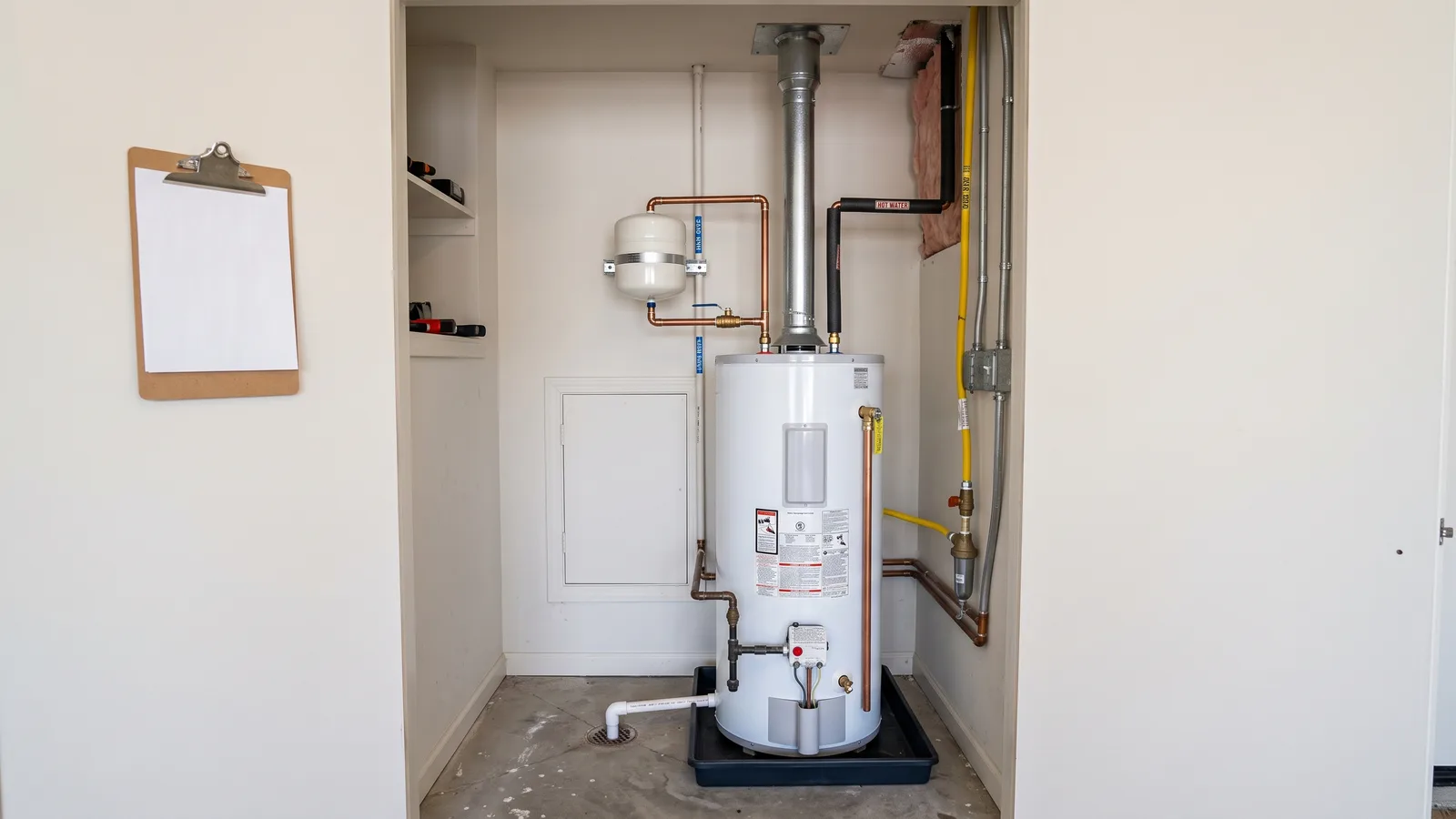
Do you need a permit for water heater installation?
There is no single permit answer for every US home. Local rules can distinguish a simple replacement from a relocation, fuel change or installation involving new electrical work. A contractor should explain the applicable route rather than assuming that a small job is exempt.
Ask your city or county building department which permits apply, whether plans are needed and how inspection is arranged. Describe the building type, old and new heater, fuel and location. That produces a more useful answer than asking only whether “a water heater” needs a permit.
A practical California example
San Diego lists ordinary water-heater replacement among work eligible for its no-plan plumbing/gas permit route. Tankless replacements are excluded from that particular route. Exclusion from a simpler permit route does not mean the work is permit-free.
California’s 2025 Energy Code applies to permit applications submitted on or after January 1, 2026. Its water-heater alteration guidance includes different compliance paths; it is not a blanket statement that every gas heater replacement is prohibited. Confirm the rules for your project and locality.
Make permit responsibility part of the quote
The written scope should name who applies, whose name is on the permit, whether fees are included, and who books the inspection. Ask what happens if the inspector requires additional work and how any change would be approved.
Keep the permit reference, inspection outcome, equipment model, installer invoice and warranty documents with your home records. The local authority can explain any completion documents it issues and how to verify their status.
Code questions that are worth asking
Have the installer explain the model-specific venting, clearances, gas or electrical supply, relief discharge, drainage and any seismic or protective requirements that apply. The guide is a prompt for that conversation, not a DIY code checklist.
Manufacturer instructions and local requirements both matter. An older installation’s layout is not proof that the same arrangement is acceptable for the replacement. If you receive conflicting advice, ask the responsible building department to clarify the applicable requirement.
Keep this checklist
- Correct city or county department
- Replacement, relocation or fuel conversion identified
- Permit holder and fee responsibility
- Inspection booking and completion documents
- Written approval process for additional work
Common questions about this installation
Do I need a permit to replace a water heater?
Check the building department responsible for your address before work starts. A like-for-like replacement can still need a permit; relocation, fuel changes and new electrical work can follow different requirements.
Who should handle permits and inspections?
Ask the provider to identify who checks requirements, applies for permits, pays fees and schedules inspection. Include these responsibilities and the process for additional required work in the written quote.
Does one national permit rule apply everywhere?
No. Ask the city or county responsible for the property. The California guide gives a documented local example, but another jurisdiction can use different applications, inspections and requirements.
What changes a simple replacement into a bigger job?
A change in heater type, fuel, location or demand can require different venting, gas supply, wiring, drainage or access. Ask the installer to separate the equipment replacement from necessary building work in the quote.
What should I ask before approving a quote?
Confirm the exact model, included labour and materials, excluded work, permit responsibility, removal, disposal, taxes and warranty terms. Ask how any unexpected work would be priced and approved before it is carried out.
Sources and review
Checked October 6, 2026. Manufacturer guidance is used for technical requirements; published cost guides provide broad estimates. This is not an on-site assessment or a laboratory product test.