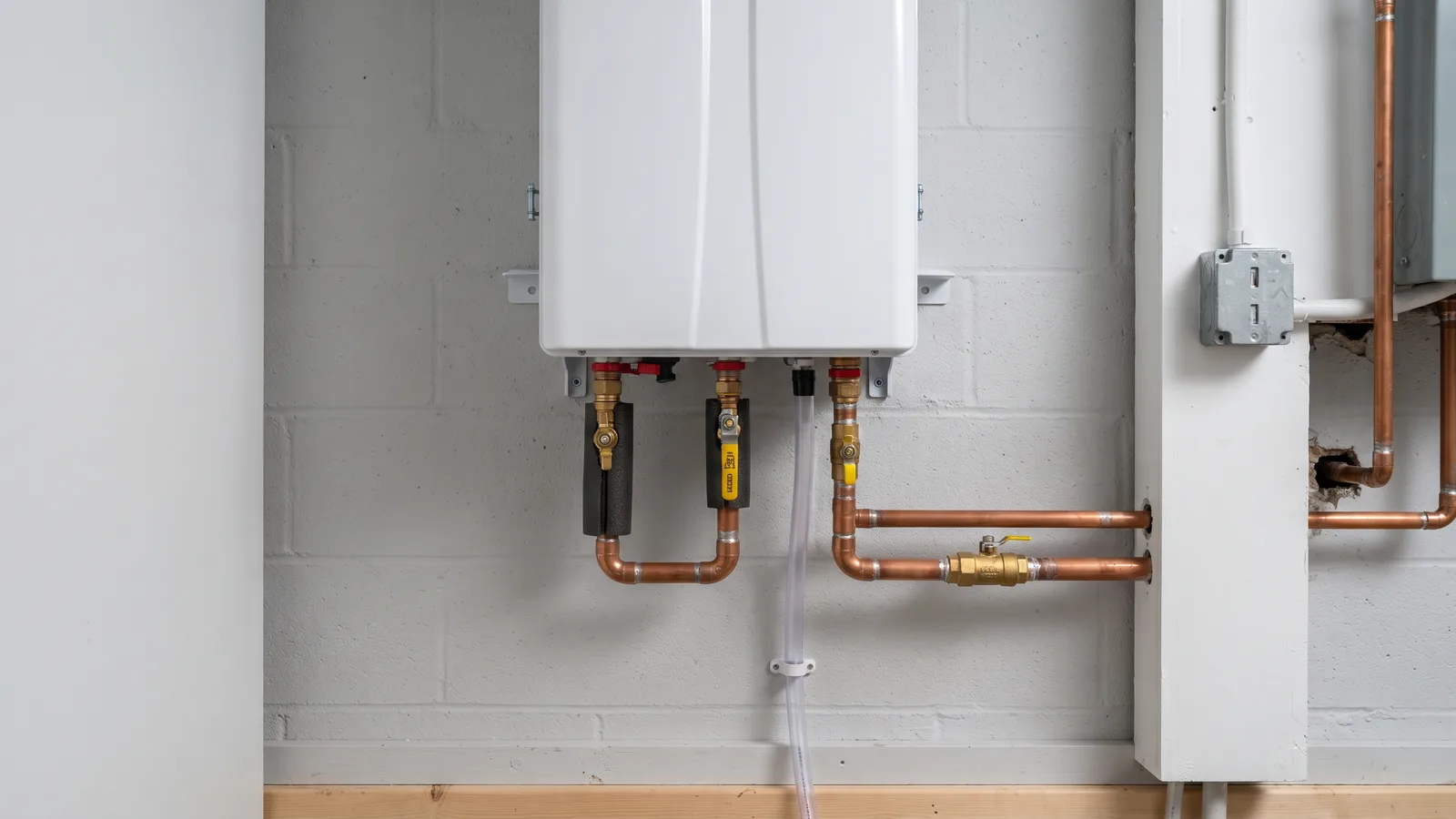
Named models: specifications and installation fit
Two documented examples show the different installation decisions behind gas and electric tankless. They are a shortlist to discuss with an installer, not a claim that either is best for every home.
| Model | Verified specification | Consider / check first |
|---|---|---|
| Rinnai RX199iN Condensing gas tankless | Consider when the home can support the gas supply, approved venting, electrical power and condensate needs. Compare the winter flow required by simultaneous fixtures. Watch out: The maximum advertised flow is not the cold-weather delivery rate. RX is recirculation-pump capable; it does not mean a built-in pump is included. | |
| EcoSmart ECO 27 Whole-home electric tankless | Consider only after an electrician checks the exact supply and total household load. It avoids combustion venting but has substantial electrical demand. Watch out: Do not compare its quoted flow directly with a gas model tested at a different outlet temperature. Cold inlet water reduces available flow. |
Tankless water heater capacity: start with temperature rise
A headline gallons-per-minute figure is not a guarantee at every temperature. Add the hot-water flow needed by fixtures likely to run together, then check the manufacturer’s output chart at the required temperature rise.
Temperature rise is the target outlet temperature minus the incoming-water temperature. Colder winter water means the heater must do more work. Compare models at the same rise, rather than comparing unrelated maximum-flow claims.
Gas tankless: a strong option when the supply and venting fit
An installer should assess gas-supply capacity with the other appliances in the home, use approved venting for the specific model and check combustion-air requirements. Condensing systems also require appropriate condensate handling. An old storage-tank vent is not automatically reusable.
Rinnai’s technical guidance is useful for understanding these checks. Its gas tankless systems also need electrical power; do not assume gas operation means hot water during an outage. Read the exact installation manual before choosing a model or backup arrangement.
Electric tankless: check the electrical demand first
Whole-home electric tankless heaters can need multiple dedicated circuits and substantial supply capacity. A vacant breaker position is not evidence that the home has enough capacity. Have the total load and exact model requirements assessed.
Stiebel Eltron publishes both technical specifications and temperature-rise sizing charts for its Tempra range. These are useful comparison references, but they do not establish that one model fits every home. Voltage and incoming-water temperature change the relevant comparison.
What a fair shortlist includes
For each candidate, record output at your design temperature rise, required supply, installation location, venting where applicable, maintenance instructions and warranty conditions. Get an installed quote for the shortlisted model, not an equipment-only online price.
Tankless heating also does not eliminate the wait at a distant faucet. Pipe length and any appropriate recirculation arrangement affect delivery time. Ask how the proposed system addresses the complaint you actually want to solve.
Our comparison position
This is a technical buying guide based on published sources, not a ranked laboratory test. Manufacturer examples help explain the decision; we have not verified local stock, contractor availability or a universal “best overall” product.
A well-chosen storage or heat-pump unit may be a better fit if tankless conversion requires disproportionate work. Compare that alternative before treating a change of technology as a necessary upgrade.
Keep this checklist
- Output at winter temperature rise
- Fixtures likely to run together
- Gas or electrical capacity
- Approved venting and condensate route where applicable
- Maintenance access, warranty and full installed price
Sources and review
Checked October 6, 2026. Manufacturer guidance is used for technical requirements; published cost guides provide broad estimates. This is not an on-site assessment or a laboratory product test.